Jääportit interview in Convivial Hermit Magazine, 2006
If the otherworldly soundscapes of composers like Thomas Köner or Paul Schutze appeal to you, it might be a good idea to pack up your bags and get ready for the journey that Tuomas Makela has prepared for you with his 9-year-old project, Jääportit. A rather routine synthesizer project influenced by Mortiis in the beginning, Jääportit have really come a long way. This is music for audial exploration, with all of the tools and equipment provided conveniently for you in your own brain.
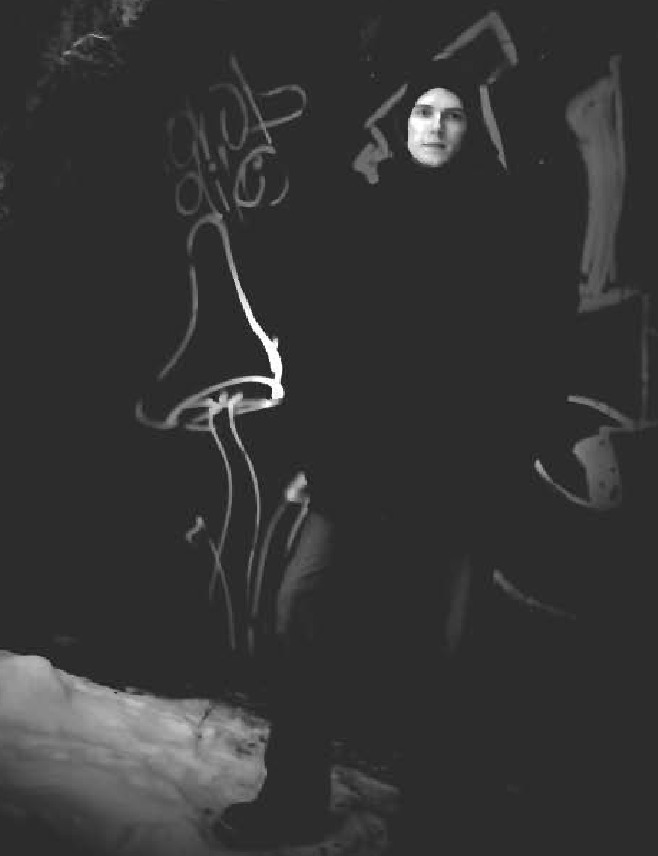
Yury: Your music is all synthesized and computer-generated. Yet there is melody in Jääportit, a melody produced through (please correct me if I am wrong) keyboard and piano. What are the instruments you have used throughout your life as a recording artist?
Tuomas: I’ve had the chance to be around music instruments all my life because I’m from a musical family. First instrument that I was forced to learn to play was a recorder in elementary school. It was quite horrible. For a while, I learned to play drums but didn’t like it, because it sounded too loud to be played without disturbing anyone else. Then, about 10 years ago, I found out simple program for computer that could be used to create music and since then I’ve used computer as an instrument. At some point I got interested to play bass guitar and electric guitar, but never had enough energy to learn to play them well enough. Playing synthesizer was far more interesting and easier to deal with when doing music with computer. I’ve also done experiments with recording my own voice using it as an instrument.
Yury: I believe electro-acoustic sounds were used on Uumenissa, the only album of yours I possess, as well as computer-generated synthesizer… please explain. Where have you come up with these sounds that were used on the album?
Tuomas: In film sound production, term “ambience” usually means the background sound of a scene and “ambient” sound consists of noises present in the environment. I have used electro-acoustic sounds on all of my records. I like to spice up the synthesized music with sounds recorded from my life, because it makes the music more alive and gives it another layer. On Uumenissa-album there are sounds recorded from the forest, inside a deserted house, one spoken poem, whispers, vocals from space documentary, wind, rain and most of these sounds are heavily edited in many ways.
Yury: The most accessible piece on the Uumenissa album is, without a question, Maa Pirstaleista. It also happens to be my favorite. Can you talk about this piece, what images it brings to mind, what you felt when you were recording it? It seems almost cinematic in its atmosphere…
Tuomas: The name of this song in English goes like “Debris of Earth” and it’s one of the oldest songs on the album. It’s supposed to tell a story about lonely moments close to earth that has been painted with white snow and lit by moonlight. Life that once becomes from the earth and later on decays back into it. I found these words for the song: “Faces transfigured on starry sky, in the middle of the humming of trees. Everything becomes clear. I behold and forget.”
Yury: Interestingly, the first half of the album sounds different from the rest. I think the first four tracks were recorded in separate sessions from the last five. Do you believe the release mixes well as a whole taking in mind the vast space in recording?
Tuomas: Yeah, first four tracks were recorded during 1999-2000, and the rest during 2000-2004. At some point I had plans to release those four first tracks as an EP but never had a chance to finish them up the way I wanted to back then. Year or two passed by until I got my hands on better music equipment than I’ve ever had. I started to go thru a learning process of a lot of things related to creating music with more “professional” way, and it effected to the sounds and the style of creating the music. I think that the album works well as it is, even if there’s some distance between the creative sessions.
Yury: I understand that you lack a formal musical education. Do you think that has been a benefit to you or a burden?
Tuomas: No, it’s not a burden since I’ve done music for so long without the education. Sure, I’m not an expert at playing the keys and it would be nice to know everything about musical theory, but I think that I have found, or at least am finding, my own way for sounds and melodies by listening, learning, and trying things out by myself.
Yury: It is strange that most of your listeners come from the metal scene, given that your music shares very little in common with it, except perhaps for a certain dark or isolated atmosphere. Does the association concern you at all? What is your relationship like with metal music today?
Tuomas: I have to admit that I’ve got my roots in metal music because that’s what I’ve been listening to since I was a teen-ager. There were times when I experimented on creating different styles of metal music by myself, and, in a way, it’s part of this whole project’s history. I’ve always tried to expand my taste in music and somehow at some point got too bored with metal music and replaced it with a research on vast field of electronic music scene. The association doesn’t concern me; more likely it’s nice to play around with it. Of course, it would be nice to get some attention from outside the narrow-minded metal scene. Today I might listen to metal every now and then. I’ve also been recording tripping synthesizer parts for one of my friend’s metal band’s album.
Yury: Personally, I would find it offensive to find out that my work was being used as “background music”. It is almost like someone saying that he appreciates The Convivial Hermit but strictly as toilet reading. What is your reaction to this? Was Jääportit really ever intended as “background” music?
Tuomas: Hey, it’s good to read in the toilet and it’s even better if there’s some good music on the background. No, it was never intended as background music, but it can be that, too. It depends on the listener. For me, it’s something more and that’s what counts.
Yury: What is your view on music as a form of meditation? Do you practice meditation on your own? It has become a kind of cliché answer to say inner tranquility and balance is what practitioners of these arts seek exclusively… Do you believe there is more behind the scenes, or is it as simple as that – inner balance and tranquility?
Tuomas: I don’t practice meditation but I do have a tendency to ponder a lot of things by myself while observing life. Creating music might be a form of meditation at its best, when one can forget everything else and just submerge oneself in the world of sounds. It would be great to reach inner balance but my mind is just too inconsistent.
Yury: Pardon me if this sounds like psychoanalysis, but do you think your music compensates for something that is lacking in your life, or perhaps ameliorates for its troubling aspects, like an inner turmoil or psychological (dis)stress?
Tuomas: I disgorge feelings and thoughts from myself to the music and so it does ease psychological stress and inner turmoil. Music is a way to speak about things I can’t say otherwise.
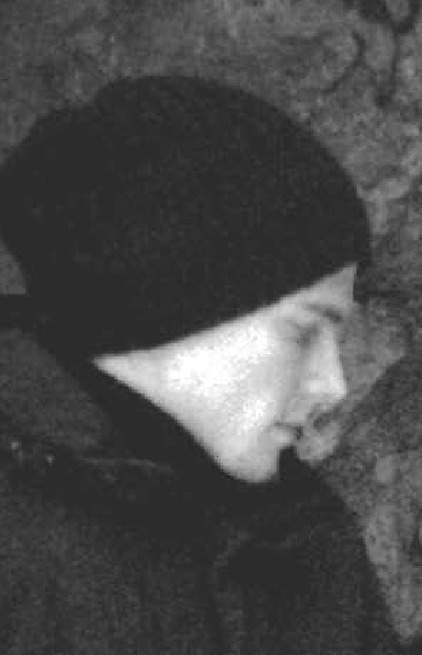
Yury: As Jääportit sounds so cinematic, at least to me, I cannot avoid asking you about your favorite films, the films that have influenced your work the most… Do you have favorite films, or directors that you follow? Personally I have many directors I love that I could name to you as my favorites… Ingmar Bergman, Werner Herzog, David Cronenberg, Gasper Noe, etc.
Tuomas: I watch a lot of all kinds of movies and mostly pay attention to the way movies are made, especially to the sounds and score. I like all of the works by David Lynch and some films by Stanley Kubrick, Ridley Scott, Darren Aronofsky and David Fincher. Sci-fi and horror movies have always been my favorites, films like The Shining and Blade Runner. [These are a few of my favorites as well. – Yury]
Yury: What has the greater impact on you from the two: films or books? I realize that you are interested in literature, so I ask this question. Who, for example, are your favorite authors and what is it about their works that draw you so close to them? Is there a certain type of literature that you find most rewarding? Why do you think one type of literature is more rewarding to you than another?
Tuomas: Books must have greater impact, because when reading the text I can use my imagination freely to realize the story on my mind. I can find one sentence from a whole book that gives inspiration for a song. I read a lot of fiction, some biographies of artists (last one was Stephen Davis’ biography of Jim Morrison) and also some non-fiction (mostly music and art-related stuff). Few of my favorite authors are William Gibson, Philip K. Dick, Robert Holdstock, H. P. Lovecraft, Iain M. Banks and Arto Melleri. Sci-fi, fantasy and horror stories have always been the most interesting reading to me, because they are related to something unknown, unfamiliar and new things.
Yury: Nature, literature and film are part of your influences, as you mention in your interviews and as is clear by now, but curiously, dreams are never mentioned, despite the fact that your music is often associated with dreams by yourself and others. Do dreams influence you? For example, do you ever “hear” music in your dreams that you later transcribe when you are awake? Are your dreams “with sound”?
Tuomas: Dreams have a great influence. Once I saw a dream where a couple of bloodhounds tear my body off to pieces and soon I was doing a song about it. Mostly my dreams are visual, but sometimes they have sounds, too.
Yury: Let’s move on to more interesting questions. What is it like, to give the reader some impression, for an artist like yourself to live in Oulu, one of the coldest (I guess) cities in Finland? Please describe some of the things you see regularly in your vicinity and the feelings and images that come to mind. Are there any special places that have had an effect on your interests and tastes growing up in Finland?
Tuomas: I’ve lived around many different places in Finland, but several years of them in Oulu. It’s quite beautiful city, even a bit ruined with industrial life, and sure could be one of the coldest cities in Finland. During the last summer I moved from Oulu to Tampere, almost 500 kilometers to the south, because I started to study in here. Things I see regularly in my vicinity are highway view with red lights and some trees in one window, suburb with apartment buildings in another window, all of this painted with grey fog. It gives a mysterious feeling. This place is still new to me and I don’t know many sights around here yet. One very special place to me is a forest near my childhood home.
Yury: I am curious of how cold a climate can be for a human to survive in, if you have information on this topic. What are some of the coldest temperatures that you yourself have experienced? I should tell you, in connection, that I was born in Moscow, Russia, during one of the harshest winters on record – 1978 – at least according to what my parents told me. My mother said that the pipes burst from the cold in the hospital – that was how cold it was! There are other stories like birds dropping to the ground, dead frozen, and peoples’ breath immediately crystallizing, but I am unclear about the verity of such images…
Tuomas: One of the coldest temperatures I have experienced must have been around -30 to -40°C when pipes burst from my parent’s house and their car broke. Last days around here have been the coldest of this winter. I heard from news that it has been about -50 degrees in Siberia and some people have been killed by the coldness. Quite cool. [An understatement! – Yury]
Yury: Can you please tell me a bit about Finnish saunas and the way people jump out of these hot saunas directly into freezing lakes? Have you ever done it yourself? I find it incredible from my point of view! I am the type of person who freezes in 10 degree (Celsius) temperature.
Tuomas: That’s the way to do sauna in Finnish fashion. Cut a hole in the ice of the frozen water, warm up the sauna, throw a lot of water on hot stones until it’s too hot to be inside the sauna, go for a swim in this icy water. Some people say it’s good for your health. I’ve tried it once but I prefer jumping to snowdrifts and going back to hot sauna.
Yury: What other peculiar traditions do the Finnish people have, you think, that separate them from other peoples?
Tuomas: Maybe drinking a lot of booze but that’s not so peculiar, is it?
Yury: According to a statistic I have read in a science journal some months ago, the Finnish people, along with the Swedish, achieve the highest test scores in the whole world. I have in mind schools and colleges. Does this reflect in your own experiences? Have you heard of this?
Tuomas: No, I haven’t heard anything about this kind of tests but I don’t read that much science journals, anyway. Maybe it has something to do with the technological capabilities of Finnish people, I don’t know really.
Yury: Was it difficult as a child (presumably) to learn the English language, considering how different it is in structure from Finnish? I used to write alongside a Finnish guy by the name of Mikko Kuronen, who told me that the Finnish language is not an easy language to learn in contrast to English, although English does have its fair share of non-intuitive twists and turns that one can only learn through repetition… curious of your opinion.
Tuomas: Being part of a generation that has lived whole life watching TV, and programs with English language, it has always been quite easy to adopt it as second main language. As you possibly might have noticed, I’m not good writing it, apologize for that.
Yury: Imagine that you lived in a cottage in the middle of a forest, on your own, separated from civilization and its comforts and conveniences. Do you think you would be able to survive for long?
Tuomas: I’ve been thinking about moving to a cottage far away from civilization some day. As it is possible to work via internet so easily, it even could be possible. I would need a possibility to visit a place to buy food because I don’t have any hunting skills.
Yury: Now picture that you have your own space shuttle and you are able to fly through the cosmos. What planets in our solar system outside of earth do you think might provide the best sound sources for new recordings, just out of your imagination? Which are the places you would go?
Tuomas: Moon would be the first target because it’s the closest one, then the trip would go on to Mars, Jupiter, Saturn and from there on thru a black hole to another dimension in the universe. I would collect samples of sounds from each place, but I’ve a hunch that planets would be too silent to get anything that special recorded. While traveling I could write cosmic symphony for the stars. [Haha, I like that. – Yury]
Yury: There is a theory in quantum physics today, I believe it is called M-Theory or some such, that all matter in the universe is made up of strings, which are essentially vibrations taking place in hyper-dimensional space. You might find this odd but your music brings to mind these subatomic worlds in me, perhaps due to its shimmering, distant quality… distant but in a sense pristine, ordered and highly organic, if you know what I mean. I would use the term “wave-like”. I realize I am talking of quantum spaces and that neither you nor I are experts in this field (I certainly am not), but have you ever thought of these extra-dimensions in relation to sound or simply to the universe in general, as a highly energized, almost “musical” construct? What do you think of this idea, in abstract, of quarks consisting of minute vibrations, and of the universe being, ultimately, nothing more than a vast musical instrument?
Tuomas: Now you’re going a bit over my knowledge. I haven’t heard about this theory before but it sounds interesting.
Yury: So what’s next now for Jääportit?
Tuomas: I did one long strange song for a compilation album under theme of H.P.Lovecraft writings but I’m not sure when it will be released. I’ve also been creating new material for the next full-length album but there’s still a lot of work to do. It’s going to be recorded in few different sessions because I’ve got so much other things to go thru that I haven’t got much time for my music lately. However, the next album should sound more like a one package and offer new and special kind of material.
Yury: Tuomas, I want to thank you sincerely for breaking away from your creative pursuits and other activities to answer my interview. I wish you the best and hope that you continue on with your art and never cease developing it. All the best!
Tuomas: Thanks for the interview, Yury. All the best for your ‘zine.
1/2006 © Yury, Convivial Hermit Magazine #3, pages 38 and 39 • The original magazine pages (PDF) • Jääportit •